
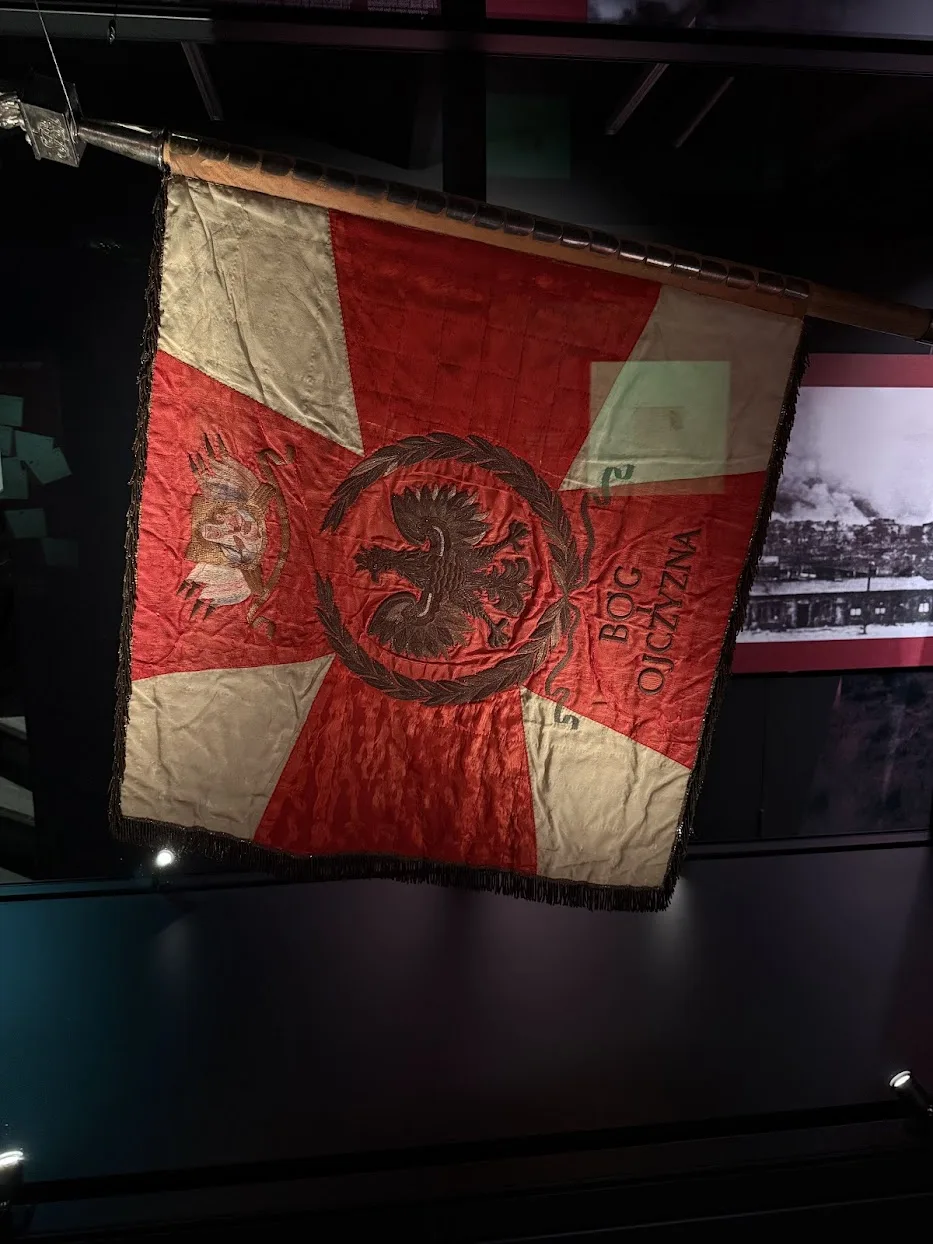
In a glass case at the Airborne Museum Hartenstein in Oosterbeek sits the regimental banner of the 1st Polish Independent Parachute Brigade. It was smuggled out of occupied Warsaw and carried to Britain, where the brigade formed and trained. It is now the centrepiece of a temporary exhibition on Sosabowski, on view until 3 January 2027, which examines the brigade’s part in Operation Market Garden and the defence of the Oosterbeek perimeter.
Major General Stanisław Sosabowski raised the brigade with one purpose: to drop into occupied Poland and fight for its liberation. Instead, in September 1944, his men were committed to Market Garden in the Netherlands. They dropped at Driel on 21 September 1944, three days later than planned after bad weather grounded the transports, into a battle already lost. The bridge at Arnhem was gone and the British 1st Airborne was being pressed into a shrinking pocket across the Rhine at Oosterbeek.
The Poles attempted to cross the river to reinforce them. Few made it. The brigade took heavy casualties for a position that could no longer be held.
In the months after the operation, Sosabowski was removed from command. British commanders, looking to account for the failure at Arnhem, attributed blame to him and his brigade. For decades the Polish contribution was downplayed in accounts of Market Garden. Recognition came late. In 2006 the brigade was awarded the Dutch Military Order of William, and Sosabowski the Bronze Lion, by the Netherlands.
The Airborne Museum is an optional visit on our Arnhem tour.
