
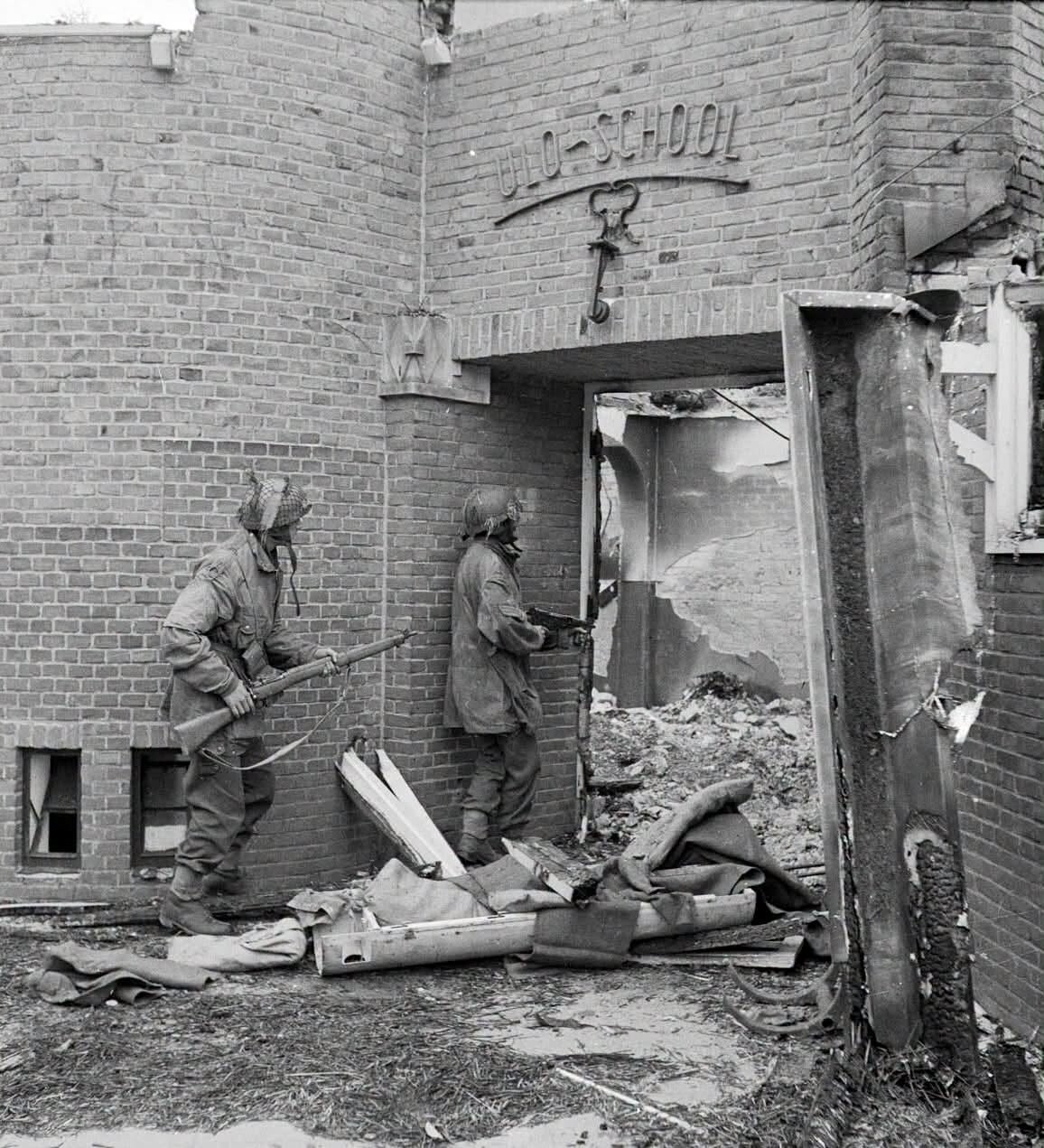
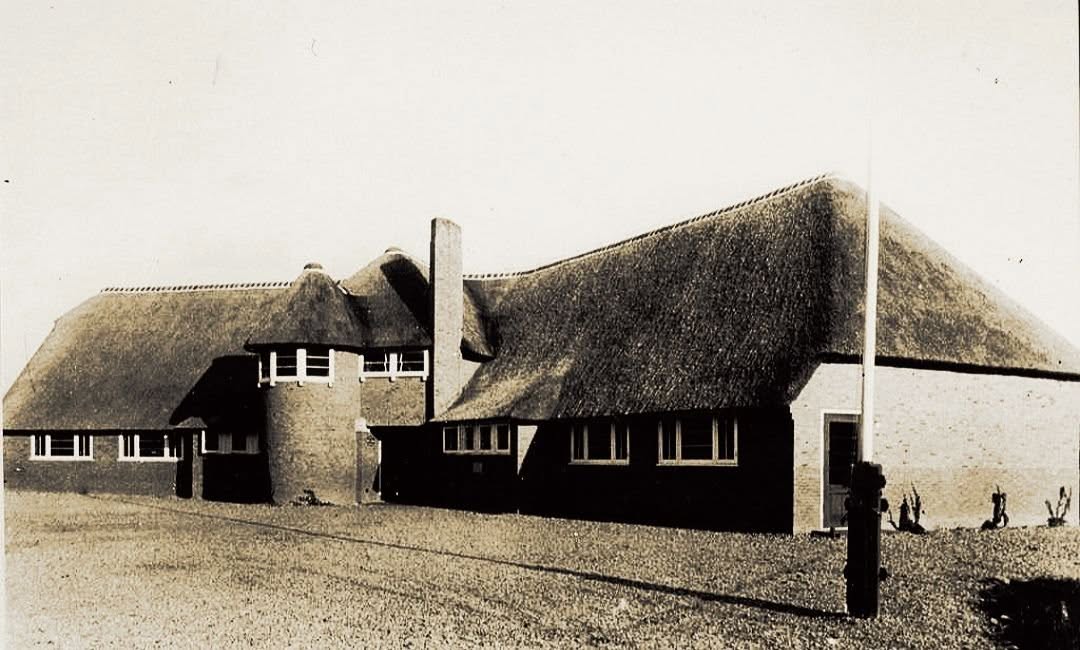
The photograph is one of the best known of the Battle of Arnhem. Two British glider pilots close on the doorway of a burnt-out school building in Oosterbeek, one with a rifle, the other with a Sten gun. Above the door, in iron letters on the brick, is the school’s name: ULO-School. The Imperial War Museum holds the picture as BU 1100. Far fewer people know the names of the two men in it, or that one of them was killed four days later.
The photographer was Sergeant Dennis Smith of the Army Film and Photographic Unit. His subjects were Sergeant J.H. Whawell and Sergeant John Turl of E Squadron, No. 2 Wing, Glider Pilot Regiment, searching for snipers at the ULO school on Kneppelhoutweg. ParaData dates the picture to 21 September 1944. Some captions give the 20th and spell Turl’s name Turrell.
Turl came from Sharpness in Gloucestershire and was married to Winifred. He had been a fireman in the National Fire Service, a reserved occupation that exempted him from call-up. He gave up that exemption to enlist in the Gloucestershire Regiment, then volunteered again for airborne forces and trained as a glider pilot. Glider pilots were expected to fight as infantry once their gliders were down.
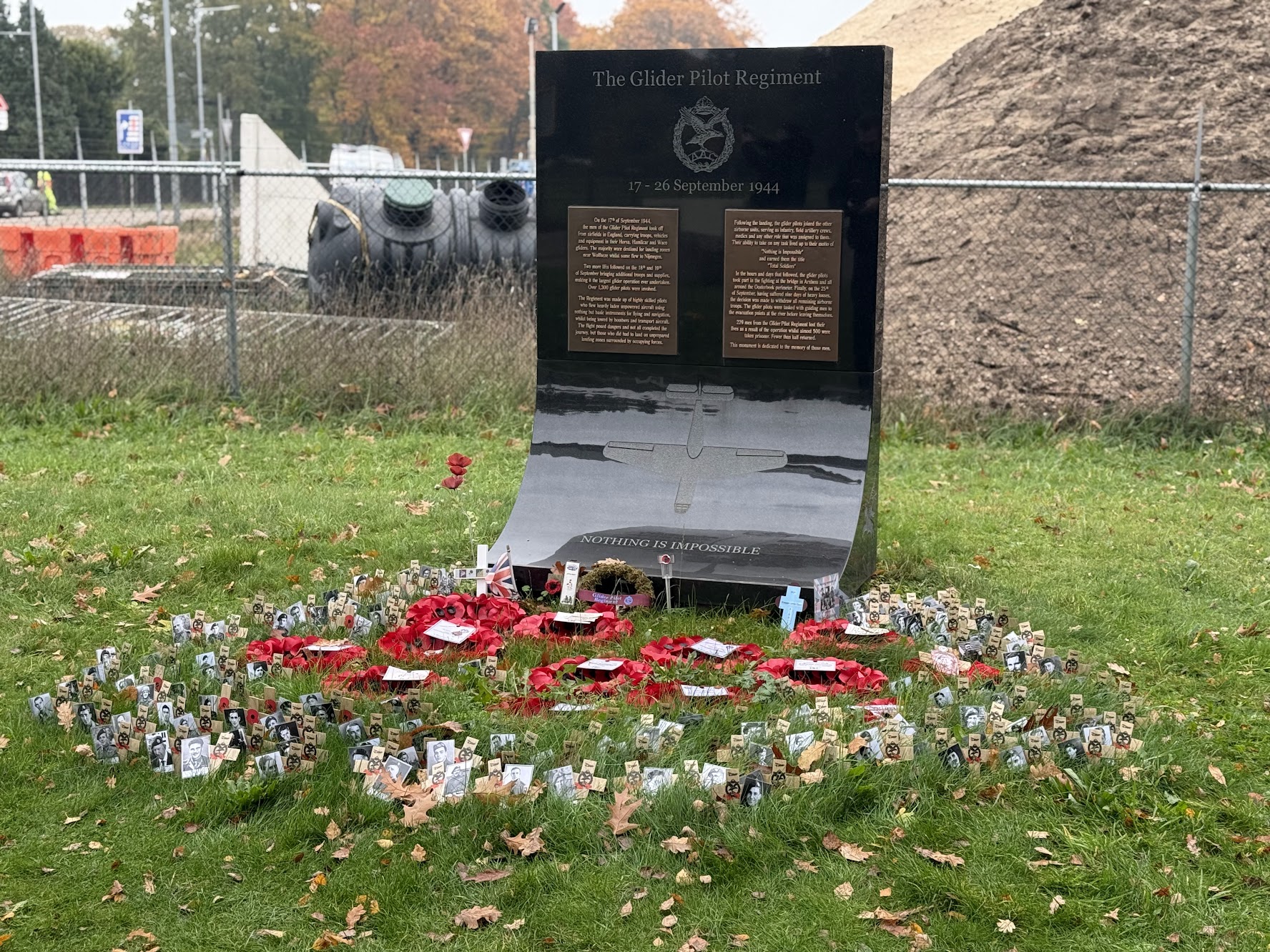
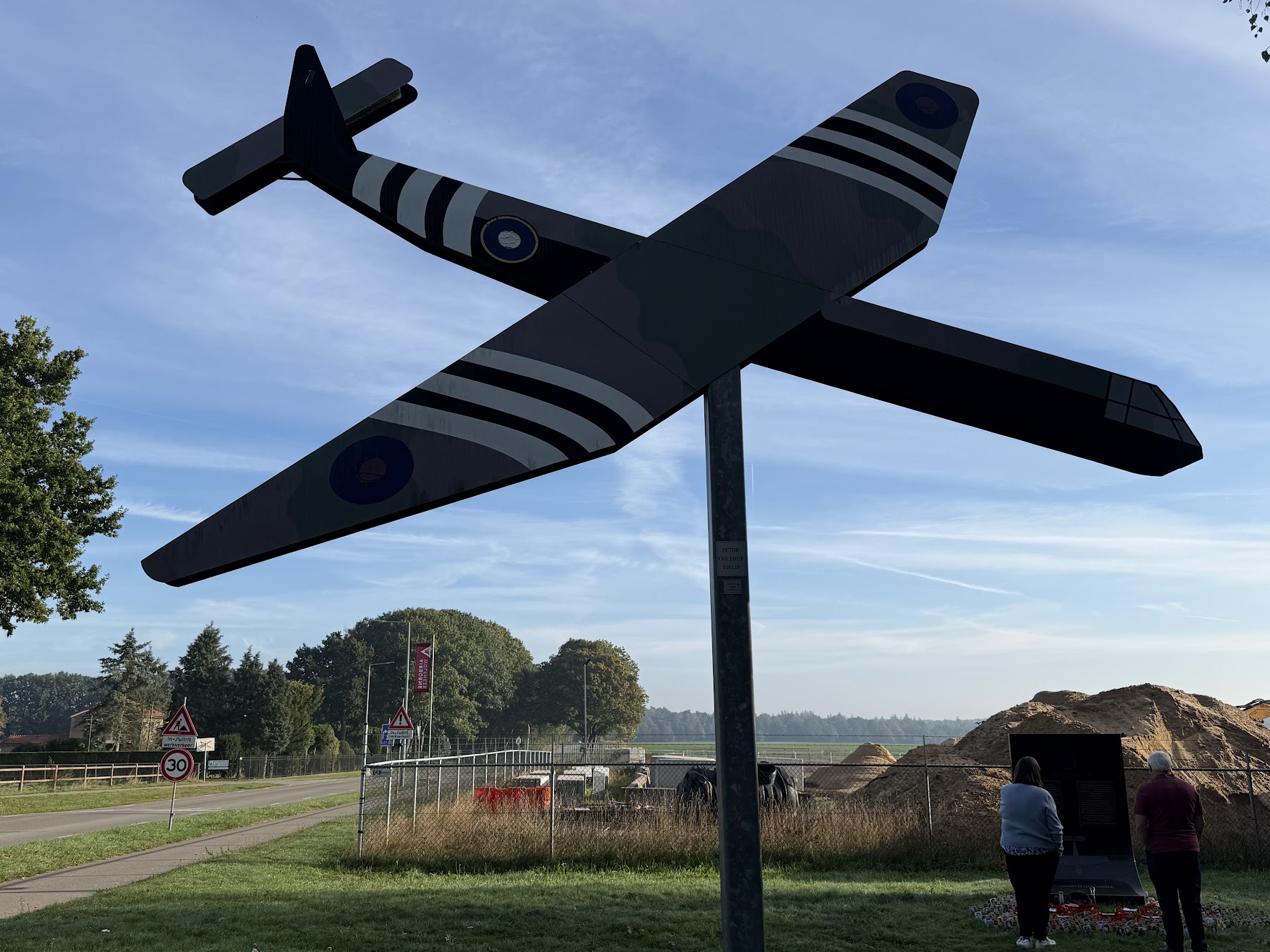
E Squadron flew from Down Ampney to Landing Zone S, north of Wolfheze, on 17 and 18 September, carrying men of the 7th King’s Own Scottish Borderers and divisional troops. A memorial to the Glider Pilot Regiment, unveiled in 2022, now stands on that landing zone. Its inscription records that 229 men of the regiment lost their lives in the operation. Which glider Turl flew, and on which of the two days, has not yet been established.
The squadron went on to fight on the north-western edge of the Oosterbeek perimeter. Turl did not go with it. Glider pilots were often separated after landing and gathered up by whichever officer found them. By the night of 19 September he was in the south of the village, one of a party of eight under Lieutenant Kenneth Chittleburgh of No. 1 Wing, positioned by a house called Vreeberg on the corner of Pietersbergseweg and Kneppelhoutweg. With him were Staff Sergeants Alastair “Bill” Taylor and Reg Dance and Sergeants Ranger and Whawell.
That night the party destroyed a German patrol of seven men with a machine gun. One wounded German lay calling out in the dark. Taylor and Dance brought him in on a chair taken from the ruins of Vreeberg, and Dance gave him his share of the last of the tea. The man died.
Chittleburgh was killed by mortar fire on 21 September, aged 23, the same day ParaData gives for the photograph a few hundred metres down Kneppelhoutweg. Turl stayed in this southern pocket for the rest of the battle, a long way from his own squadron. The house, the school and the spot where he was first buried lie within a few hundred metres of each other, and on my Arnhem and Oosterbeek tours we walk them with a print of BU 1100 in hand.
Turl was killed on 25 September 1944, the day Major-General Urquhart ordered the division to withdraw across the Rhine that night. He was 25. How he died is not recorded. He was buried in a field grave on the Hemelse Berg estate, close to the positions he had held. What became of Whawell is not known.
On 27 April 1948 Turl was moved to Arnhem Oosterbeek War Cemetery, where he lies in grave 23.C.4. Chittleburgh lies a short walk away, in grave 3.B.6.