
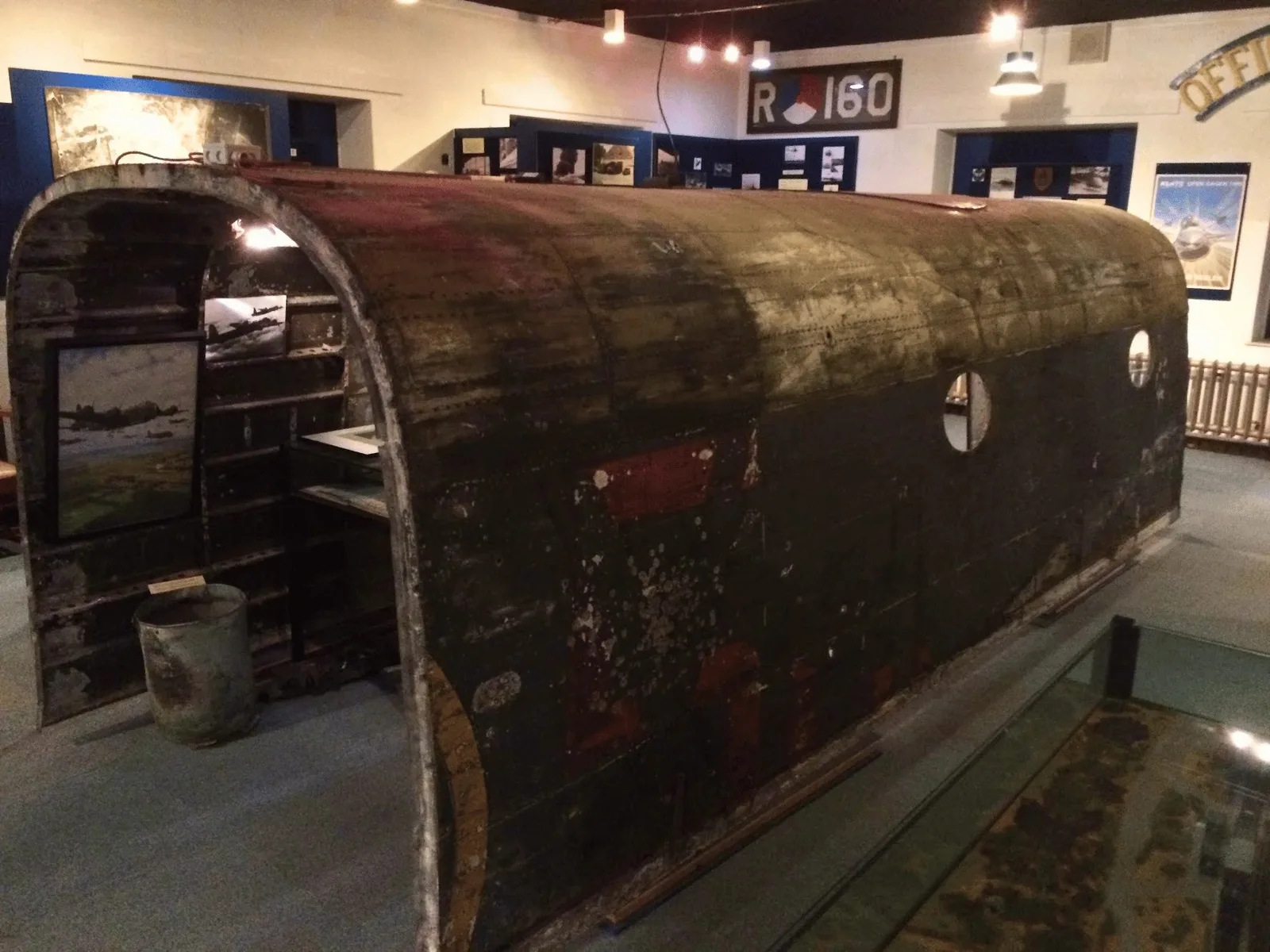
In the museum at Deelen air base stands a five-metre length of aircraft fuselage, open at both ends. The squadron code 5G can still just be made out on its side, and inside, a covered opening in the roof marks where a turret once sat. It is a section of Short Stirling LK545, one of the largest pieces of the type left anywhere. Of 2,371 Stirlings built, not one survives complete.
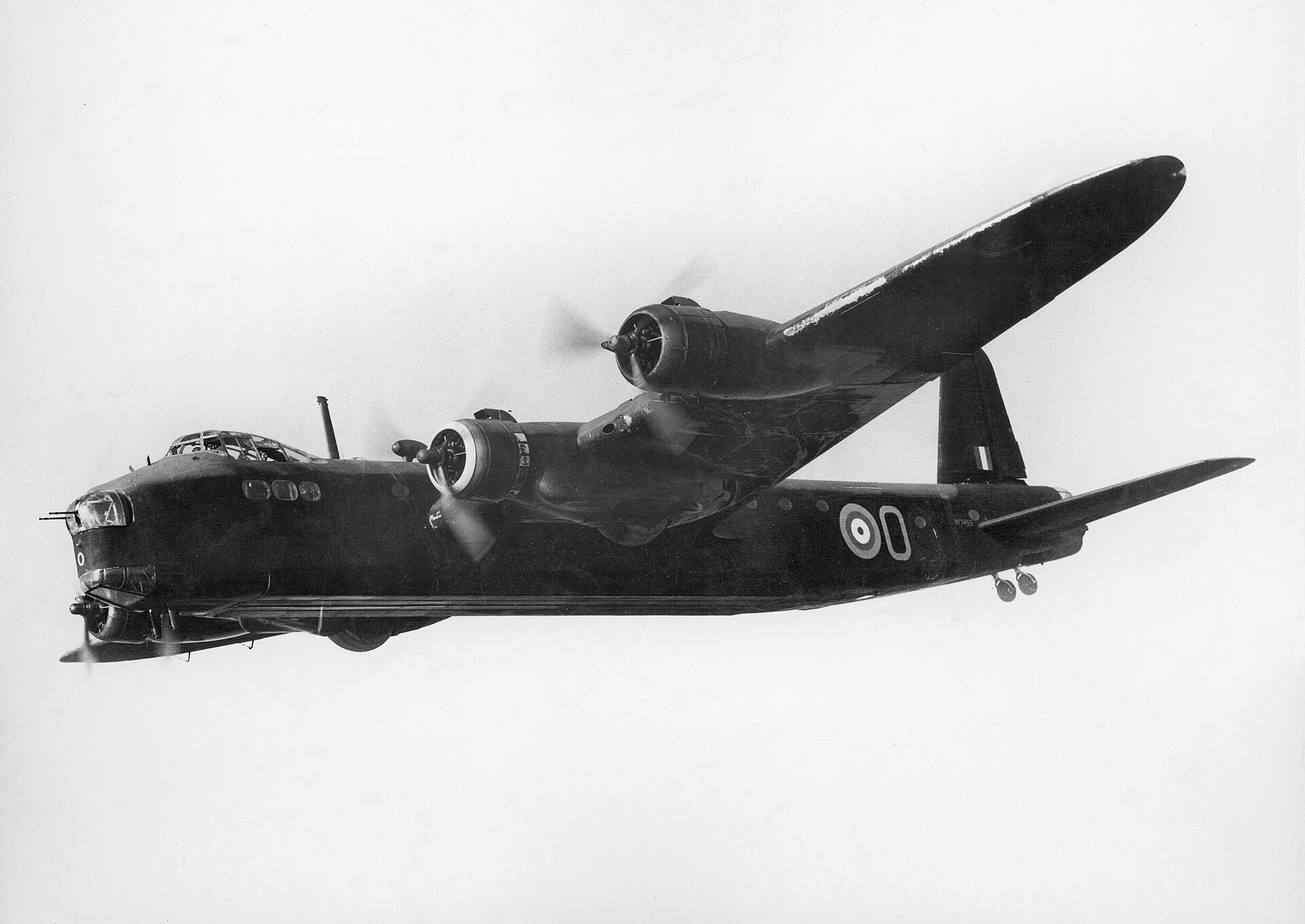
The Stirling was the first of the RAF’s four-engined heavy bombers. By 1944 the Mk IV version served as a transport with No. 38 Group, towing gliders and dropping paratroops and supplies for the airborne divisions. LK545 was a Mk IV of 299 Squadron, based at RAF Keevil in Wiltshire. From 17 September 1944 it flew three sorties to the Arnhem area, each time towing a Horsa glider.
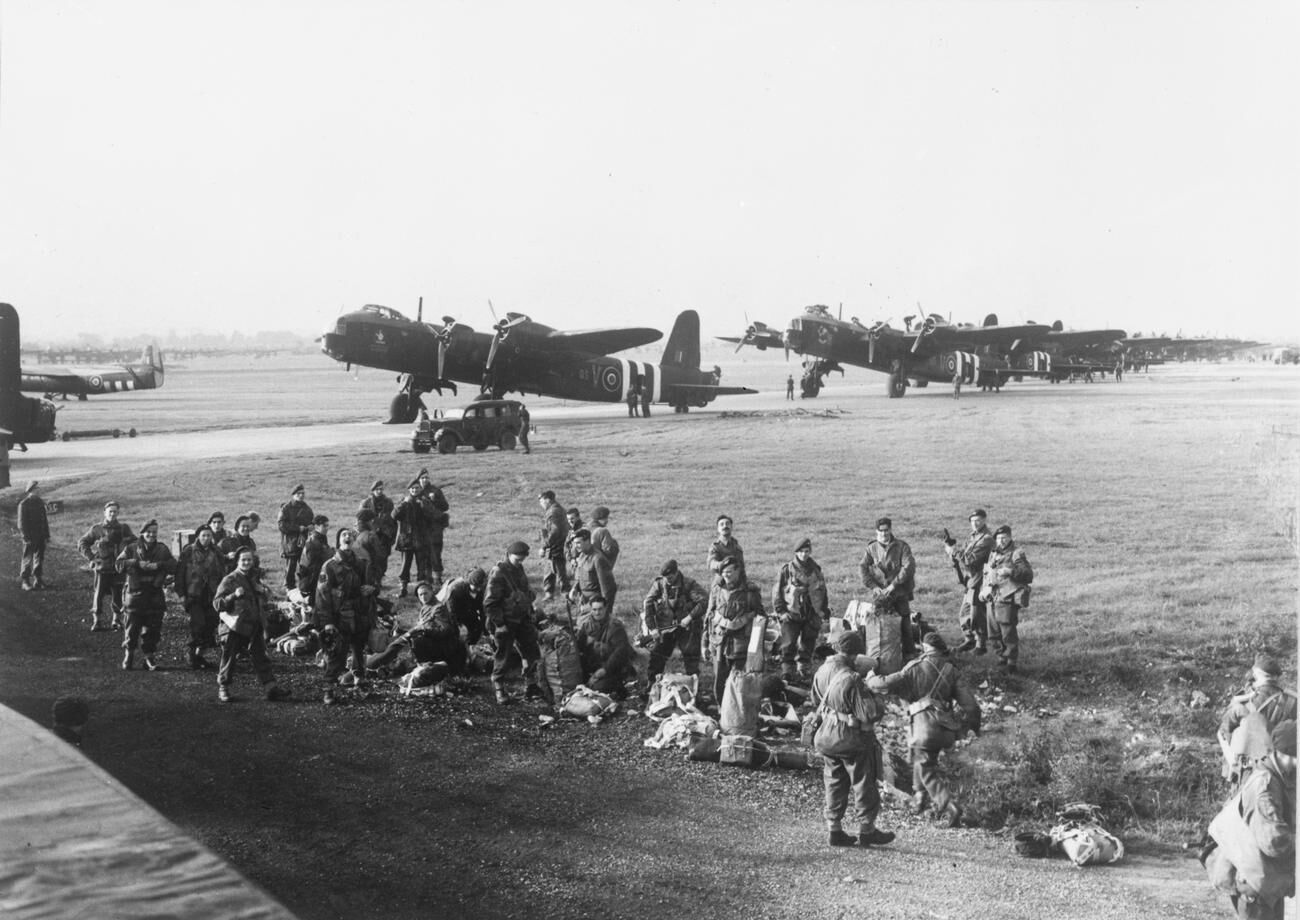
On 21 September it took off from Keevil with eleven other Stirlings of the squadron, part of a resupply force of 117 aircraft. By then the 1st Airborne Division was penned into a perimeter at Oosterbeek, and its drop zone was a small area beside the Hotel Hartenstein, the divisional headquarters. The Germans had ringed the perimeter with flak, and the transports had to come in low and steady to put their loads where the airborne troops could reach them. The Hartenstein, now the Airborne Museum, is where my Arnhem and Oosterbeek tours explain what that resupply cost the crews.
Over the drop zone LK545 was hit. The rear turret caught fire and the rear gunner, Flying Officer J.S. Sutton, baled out. He was taken prisoner. In the fuselage two Army air despatchers of 253 Airborne Composite Company were pushing the load out of the door. Corporal Clement Sproston kept despatching it, high explosive among it, while the gunner’s ammunition went off inside the burning fuselage. His Military Medal citation credits that with allowing the pilot, Flight Lieutenant Reginald Turner, to crash-land without loss of life. Turner brought the Stirling down on the Allied side of the line near Ewijk, west of Nijmegen. LK545 was not the only Stirling lost that day. LJ928 of 196 Squadron crashed near Doorwerth. Its regular crew, that of Flight Engineer Alcock, had been stood down that day.
For the seven men aboard, the crash landing was not the end of it. Dutch civilians took them in and they were passed back to a headquarters near Nijmegen. On 22 September they were sent south by lorry towards Eindhoven, on the single road that kept the corridor open. Between Uden and Veghel the convoy ran into the German attack that cut that road. Sproston’s citation speaks of four Tiger tanks. There were no Tigers at Veghel. The armour that cut the road belonged to Panzer-Brigade 107, which was equipped with Panthers.
Turner took command of about thirty men, his own crew and a detachment of Bofors gunners, and held on until British tanks reopened the road the next day. Sproston ran an observation post under fire and directed one of the Bofors guns. The bomb aimer, Flight Sergeant F.H. Sedgwick, tried to slip away on his own during the night and was captured. Sproston’s Military Medal was gazetted in April 1945. Turner, an RAF officer, received the Military Cross, an Army award, gazetted that July.
The wreck lay near Ewijk. Bernard Zwartjes, a farmer who had helped recover it, took a five-metre section of the fuselage home to Hommelstraat in Beuningen and used it as a pig shed. It stood there for decades. After his death the new owner began to suspect his shed was something more and asked experts to look at it. The faded 5G identified it as a 299 Squadron Stirling, and on 10 July 2003 the section went on display at Deelen.